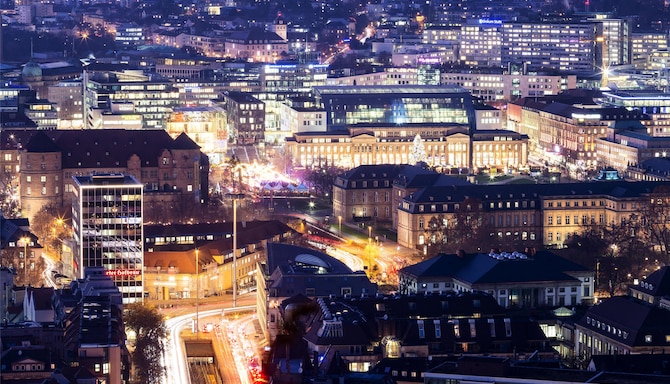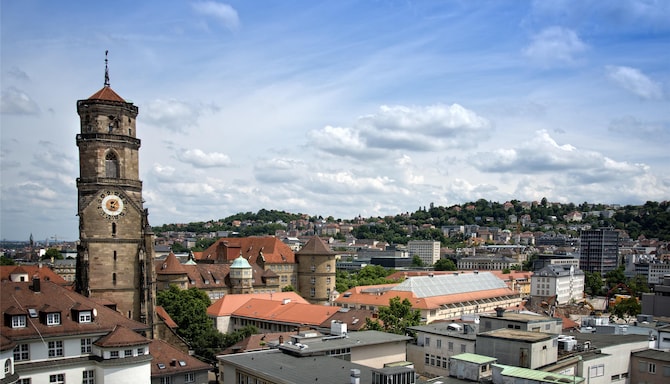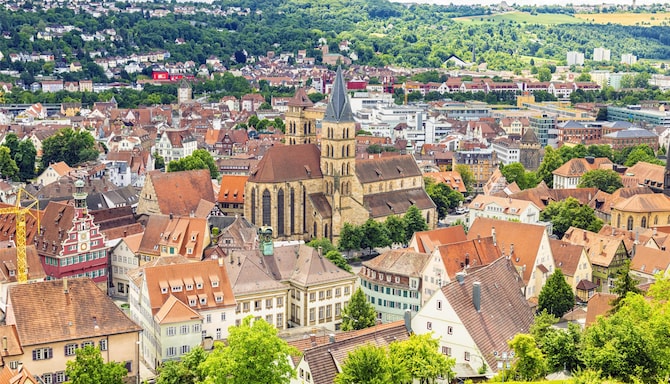
Tour the Mercedes-Benz Museum and the Porsche Museum in the city where both brands began.
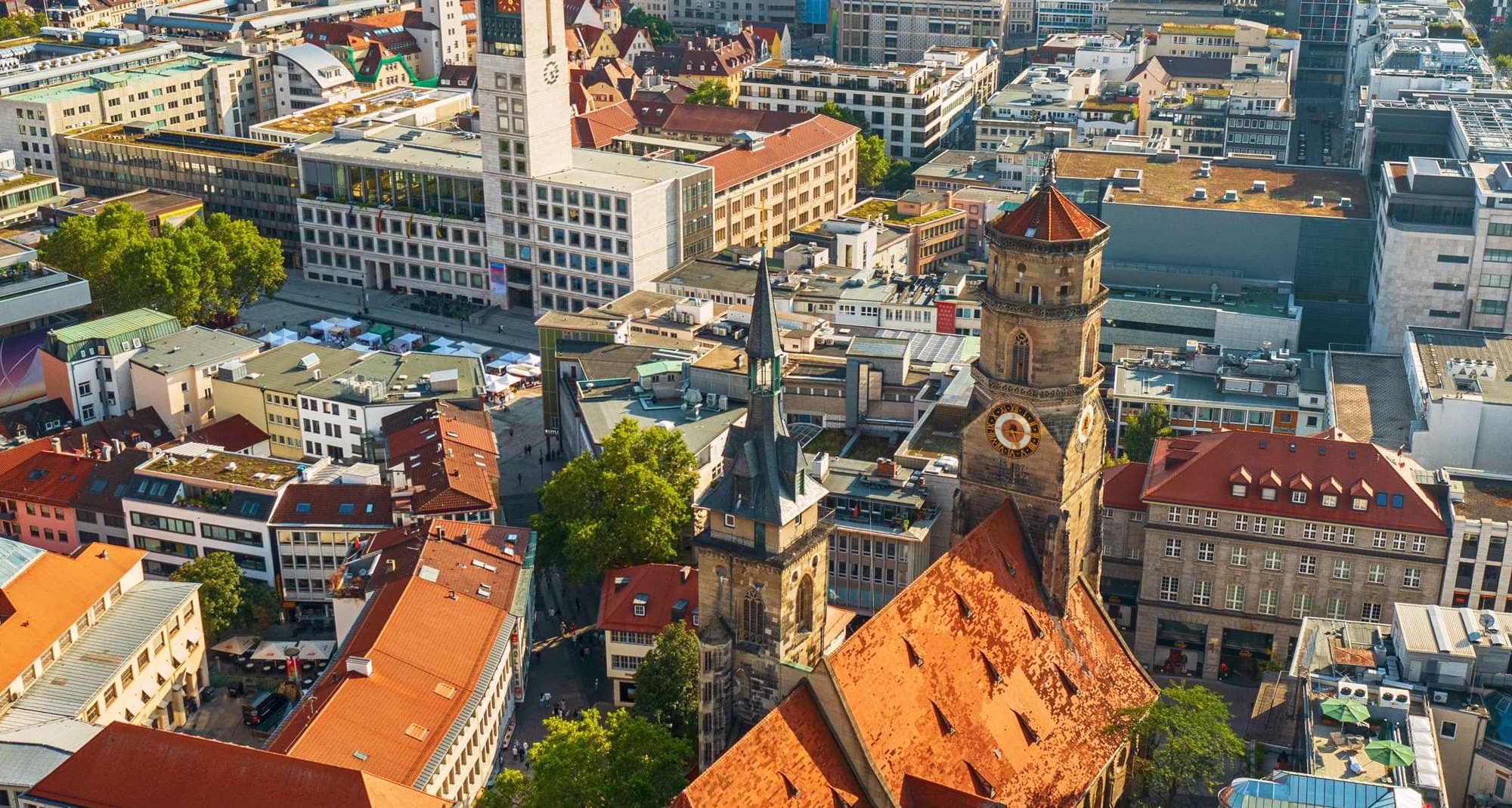
Stuttgart rewards travelers who like engineering, wine, and green space. The capital of Baden-Württemberg gathers royal palaces, two great car museums, art collections, a historic market hall, mineral baths, and vineyards that reach into the city center.
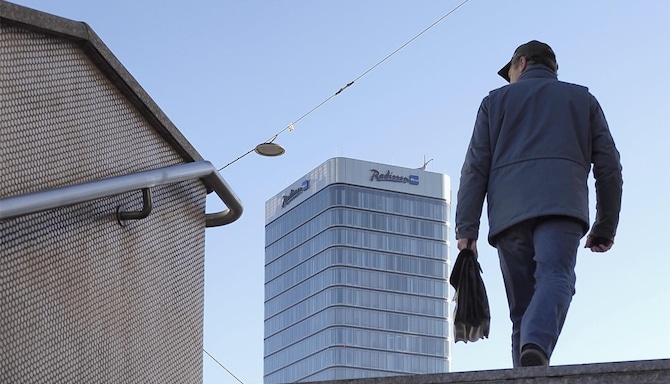
From planning your stay with Radisson Hotels to exploring Schlossplatz, the Mercedes-Benz Museum, the Porsche Museum, Wilhelma, the Staatsgalerie Stuttgart, and the Weissenhof Estate, this guide gathers the city's most useful ideas.
Ride out to Zuffenhausen, climb the SWR Television Tower for views toward the Swabian Alb, browse the Markthalle, and leave room for a walk through the Green U. It suits first-time visitors, families, design fans, food and wine lovers, and travelers who want a relaxed city break with real character.
Stuttgart combines automotive heritage, royal history, and vineyards inside the city.
Season | Best for | Travel tip |
|---|---|---|
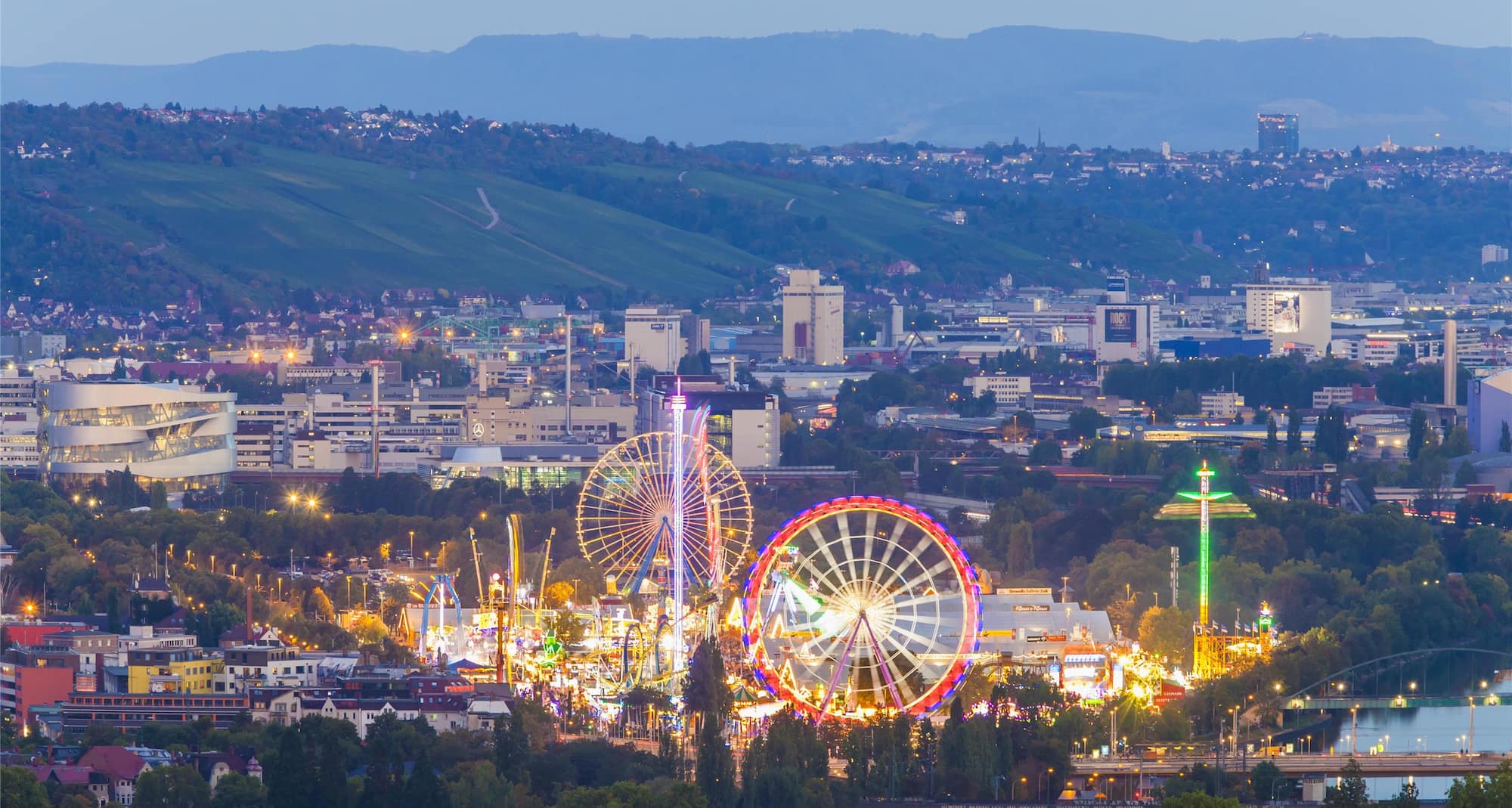
Spring (March–May) | Vineyard walks, parks, museums, spring funfair | Pack layers for changeable weather, and check spring funfair dates at the Cannstatter Wasen. |
Summer (June–August) | Park days, vineyard walks, wine village, festivals | Book central hotels early, and plan the wine village for late August or early September. |
Autumn (September–November) | Vineyard walks, folk festival, museums, calm parks | Bring a rain layer, and expect busy hotels during the folk festival at Cannstatter Wasen. |
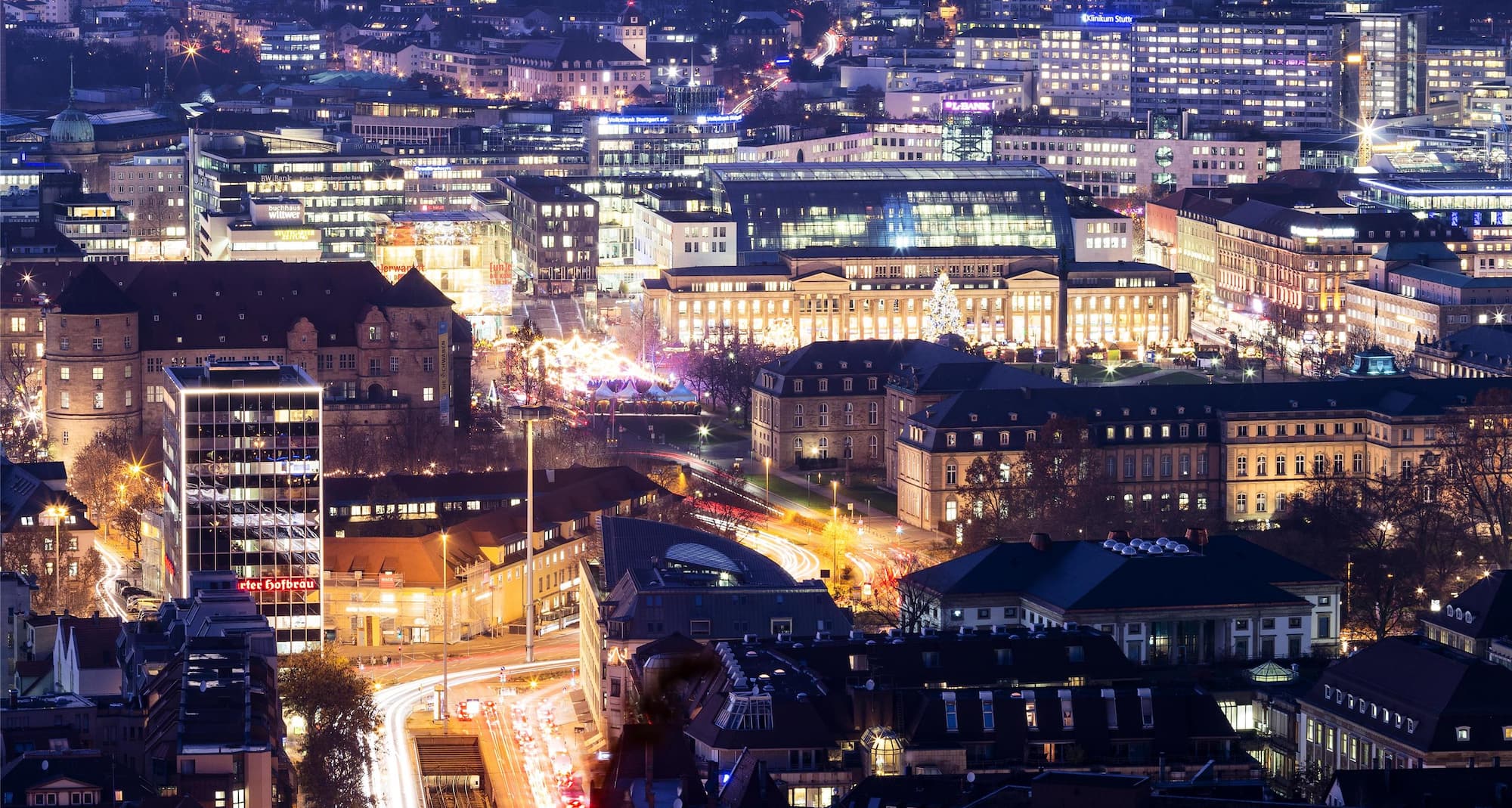
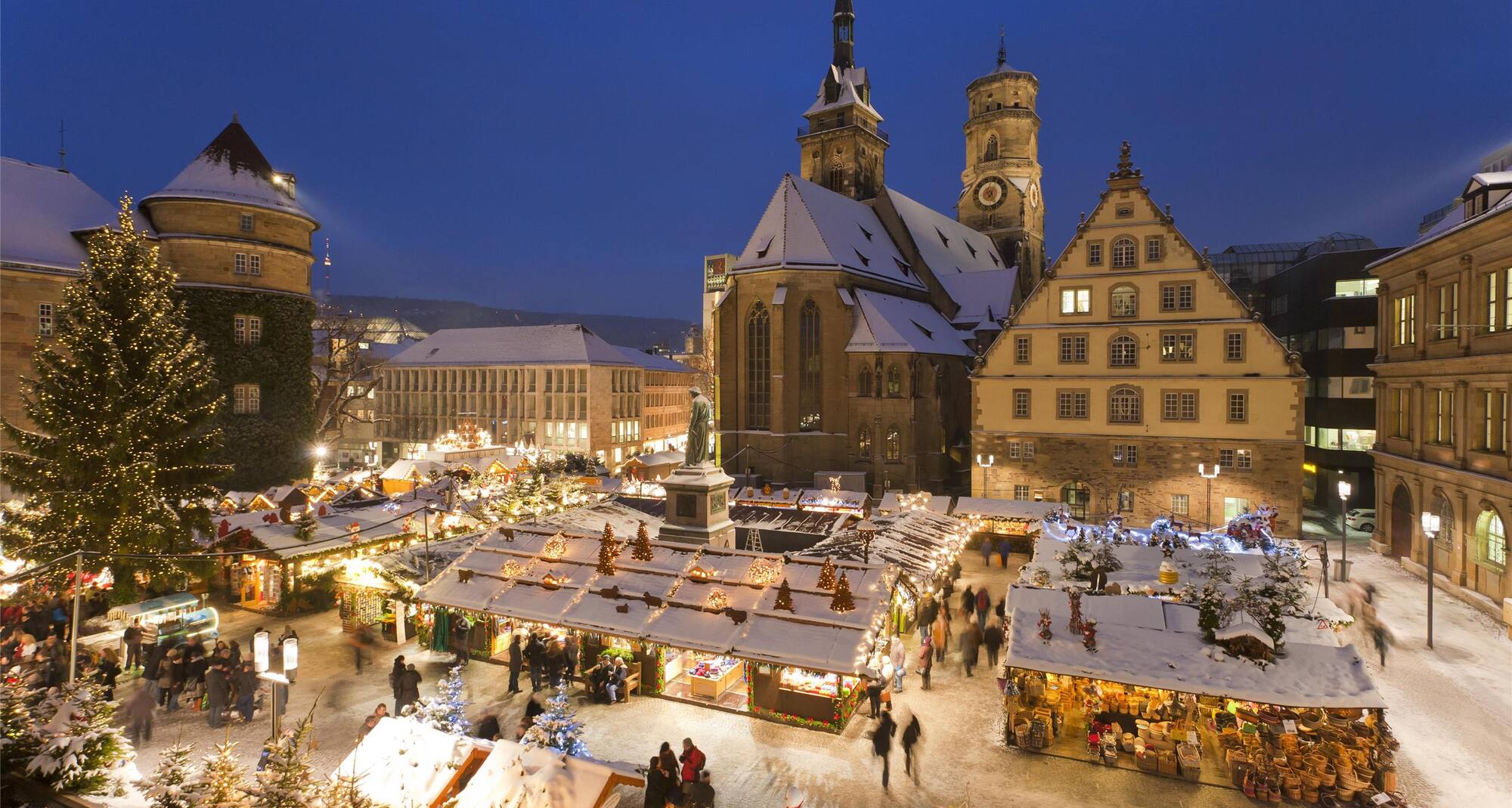
Winter (December–February) | Christmas market, museums, concerts, mineral baths | Wear warm layers and shoes with grip, and check museum holiday hours before a full day. |
Stuttgart is easiest on foot plus public transport, and one VVS ticket covers every mode. Stuttgarter Strassenbahnen (SSB) runs 19 Stadtbahn lines, around 50 bus routes, the Zacke, and a funicular, while Deutsche Bahn runs the S-Bahn. Most lines meet at Hauptbahnhof or Charlottenplatz.
From Stuttgart Airport, S-Bahn lines S2 and S3 run every 15 minutes to Hauptbahnhof in about 25–30 minutes. The U6 Stadtbahn also serves the airport at Flughafen/Messe, about a five minute walk from the terminals. Check current service before you travel. The center around Schlossplatz and Königstraße is walkable, and RegioRad cycle hire serves many sights.
Choose from car-led, food-focused, family-friendly, design-minded, green and restorative, or history-led exploration for a Stuttgart day that suits you. Each card opens the matching section below, leaving room for vineyards, museums, markets, parks, palaces, and unhurried discoveries.
Use these day plans to explore Stuttgart without turning the city into a checklist. Each route groups nearby places so you spend less time crossing town and more time enjoying the palaces, museums, market halls, parks, and vineyard views.
Add extra time for a café stop, a gallery room you did not plan on, or a slow walk through the Schlossgarten whenever something catches your attention. Stuttgart is compact at its center but hilly around the edges, so keep the structure flexible, use public transport for the outlying sights, and book timed attractions ahead where needed.
Day 1
Day 2
For days one and two, follow the 2-day itinerary at a relaxed pace.
Day 3
| Idea | Why go? | Time needed | Best for |
|---|---|---|---|
| Mercedes-Benz Museum | Trace the car's story from its invention through 160 vehicles. | 2–3 hours | Car fans, design lovers |
| Porsche Museum | See over 80 sports cars, including the 356, 911, and 917. | 2 hours | Motorsport fans, families |
| Schlossplatz (Palace Square) | Meet the city at its central square, framed by two palaces. | 1 hour | First-timers, photo fans |
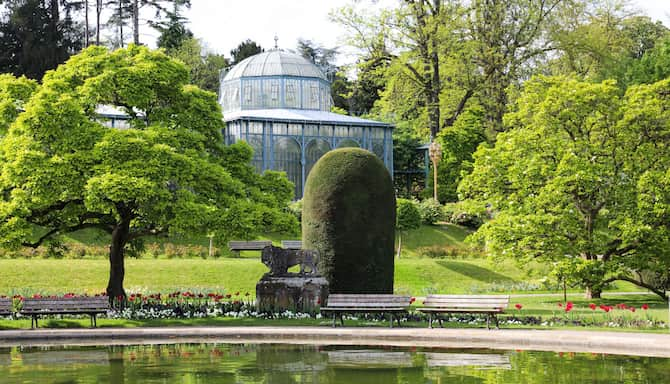
| Wilhelma Zoo & Botanical Garden | Visit Germany's only combined zoo and botanical garden. | 3–4 hours | Families, garden lovers |
| SWR Television Tower | See wide views from the world's first concrete TV tower. | 1–2 hours | View seekers, families |
| Staatsgalerie Stuttgart | Browse old masters and modern art in a postmodern landmark. | 2–3 hours | Art and architecture fans |
| Weissenhof Estate and Museum | Tour UNESCO-listed houses from the 1927 Werkbund exhibition. | 1–2 hours | Design and history fans |
| Markthalle (Market Hall) | Browse spice, produce, and deli stalls under a glass roof. | 1 hour | Food lovers, browsers |
| Sepulchral Chapel Württemberg | See a hilltop mausoleum ringed by vineyards above the Neckar. | 1–2 hours | Romantics, view seekers |
| Solitude Palace | Step inside a rococo palace with wide countryside views. | 1–2 hours | Palace and garden fans |
Stuttgart is the capital of Baden-Württemberg and the heart of Swabia, with its own dialect and customs. A polite "Guten Tag" works as a greeting when you enter a shop or restaurant, and a handshake is normal on introduction. Use surnames until you are invited to do otherwise.
Swabian culture prizes thrift and order. Neighbors still take turns sweeping shared stairwells on a rota that locals take seriously. In restaurants, rounding up or leaving about 5–10% for good service is common, handed to the server rather than left on the table. Wine matters here, and growers open seasonal broom taverns serving their own wine with Swabian dishes.
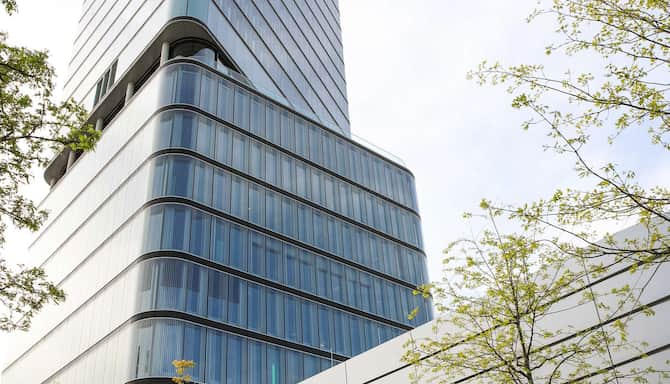
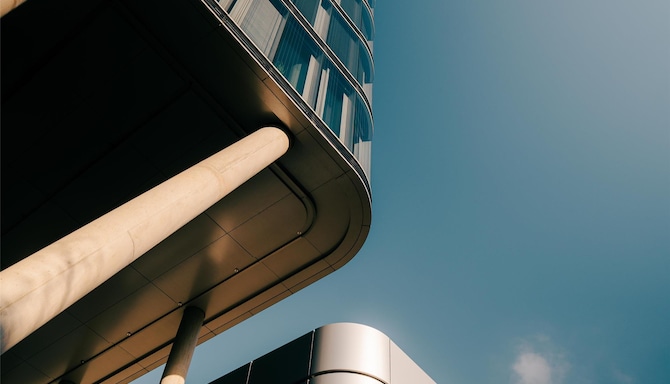
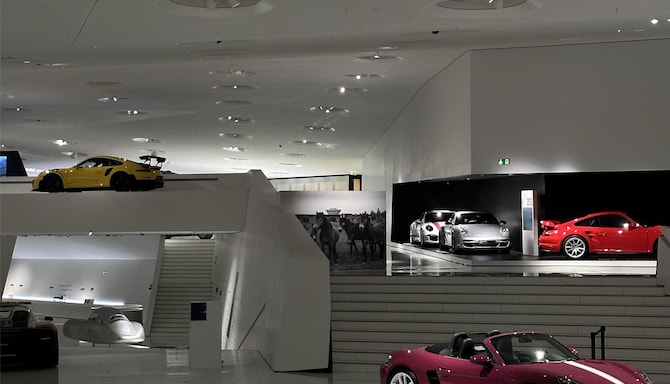
Stuttgart is where both Mercedes-Benz and Porsche were founded, and each runs a museum a short ride from the center.
The Mercedes-Benz Museum in Bad Cannstatt traces the car from its invention through around 160 vehicles and more than 1,500 exhibits, set across nine levels arranged as a double helix, so two routes wind down through the building.
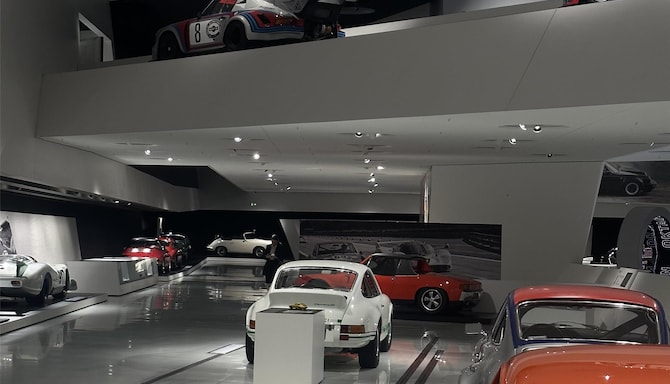
The Porsche Museum at Porscheplatz in Zuffenhausen opened in 2009 and shows more than 80 cars across 5,600 square meters, including the 356, the 911, and the 917. Every one is kept running. Allow 2–3 hours at the Mercedes-Benz Museum and around 2 hours at the Porsche Museum—be sure to check the hours before you go.
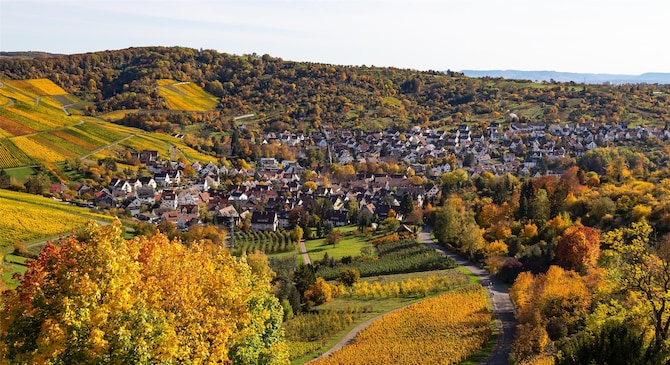
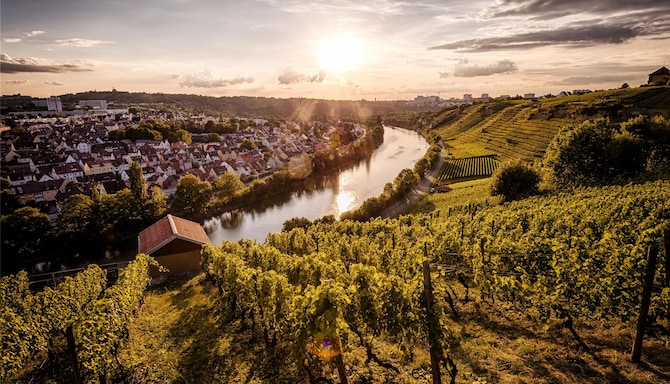
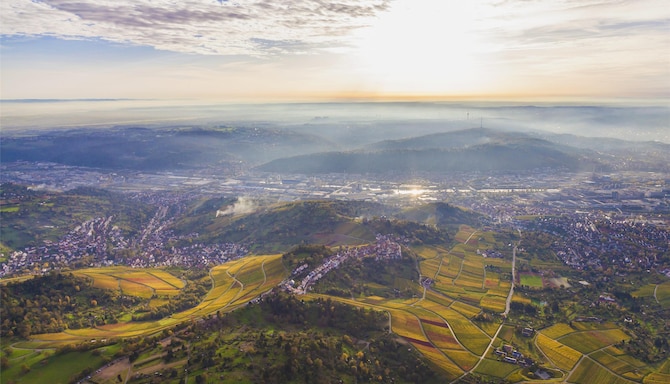
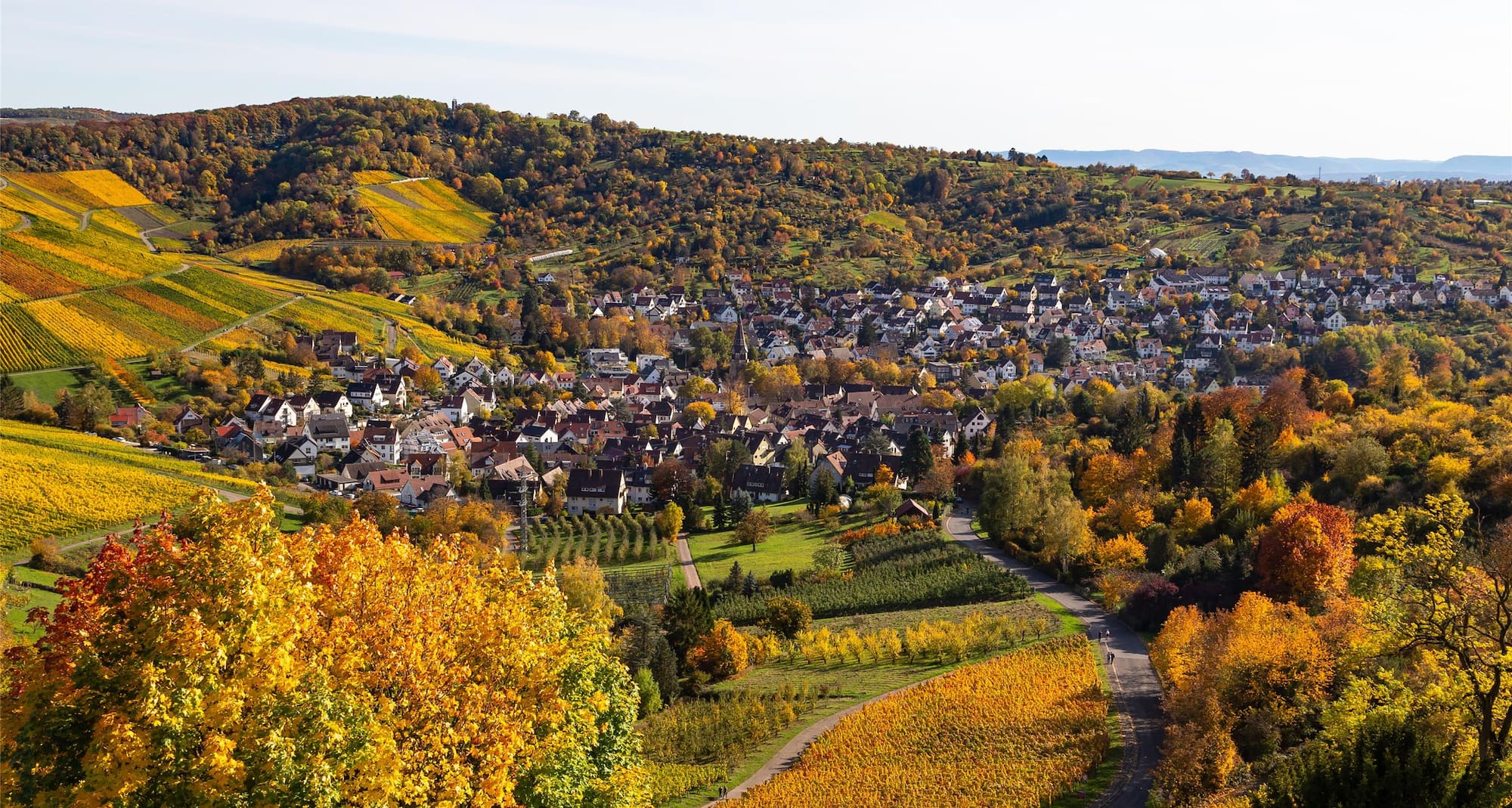
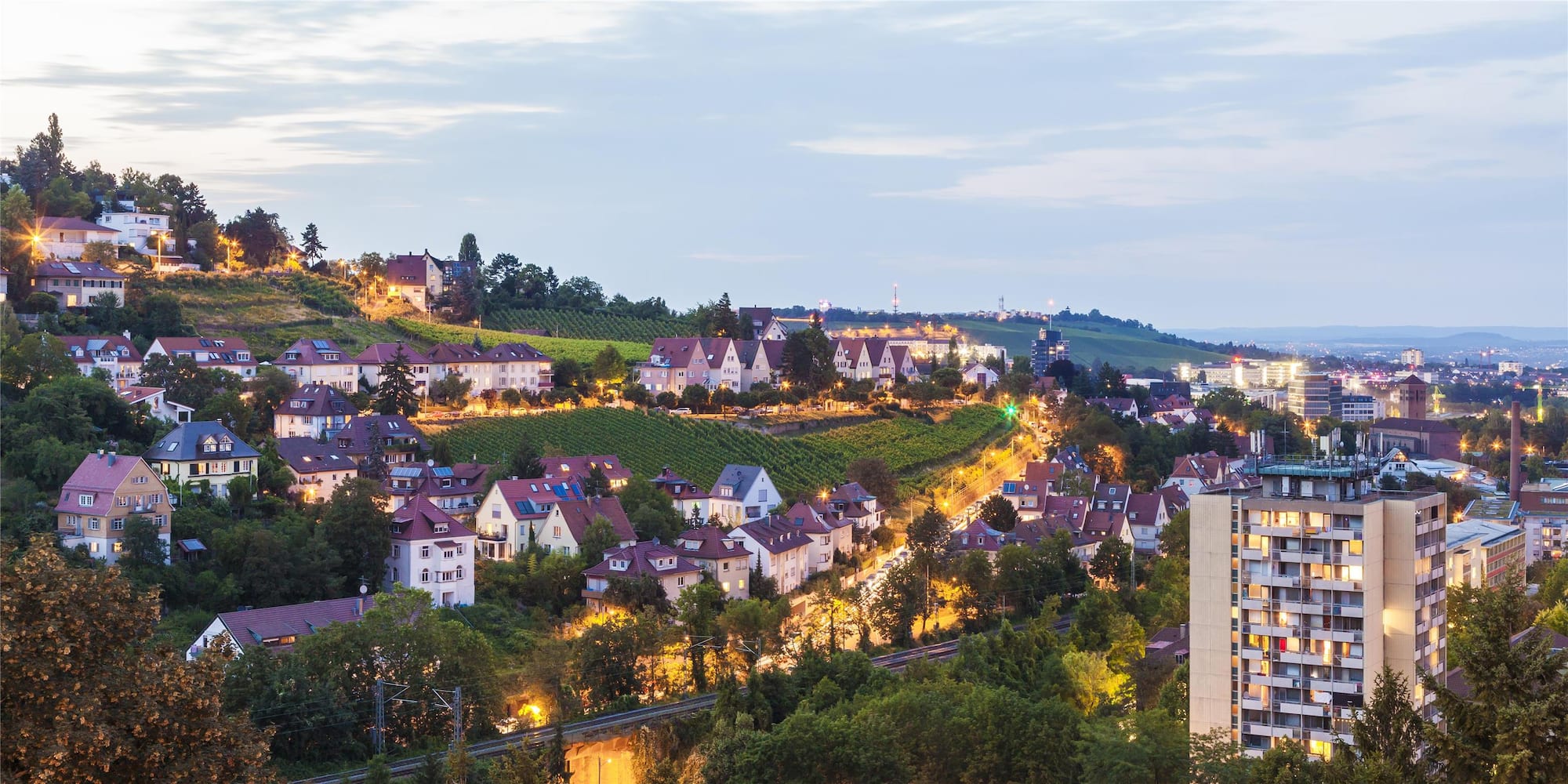
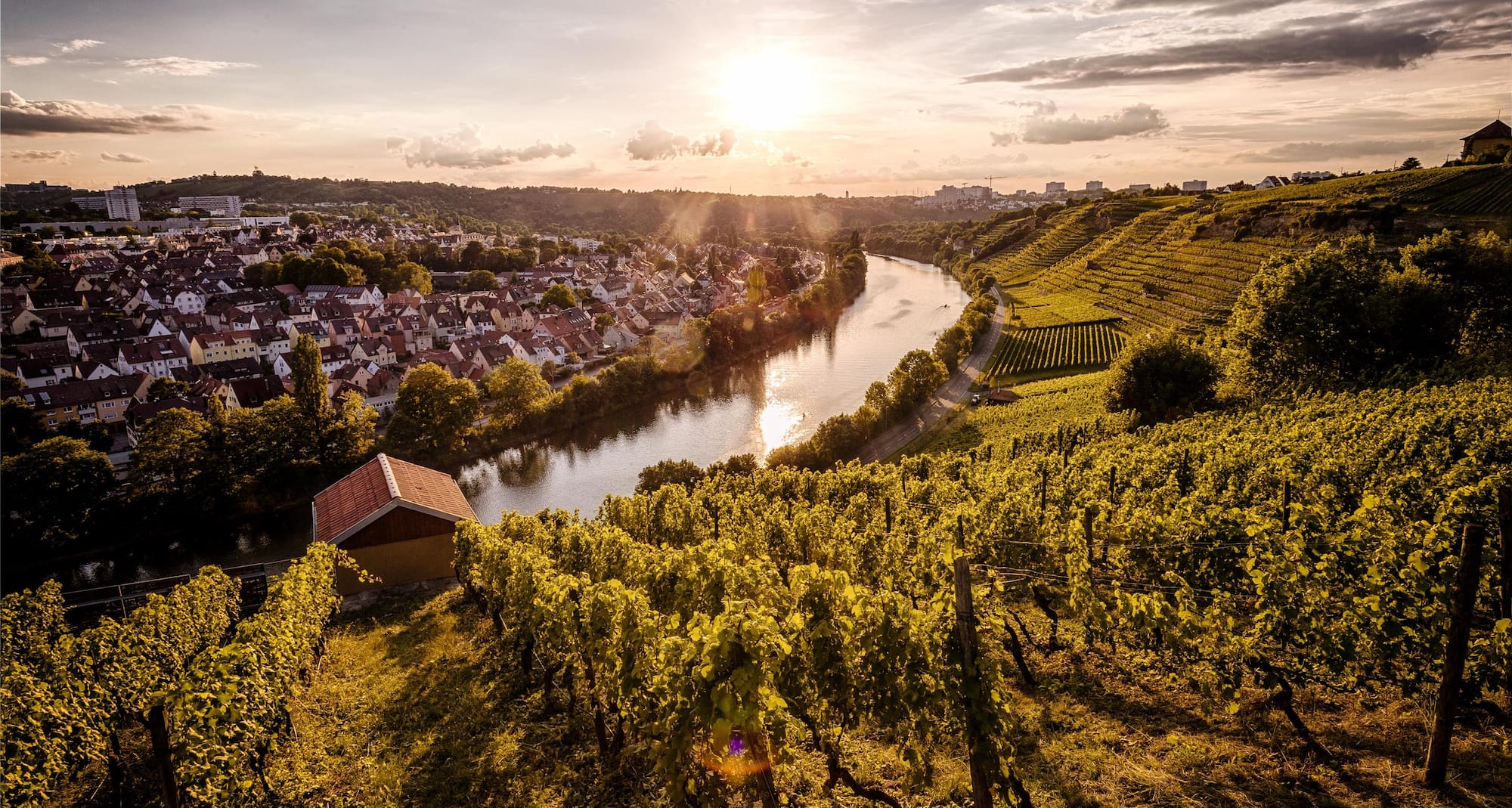
Stuttgart is Germany's largest wine-growing city, with vines in 16 of its 23 districts and a municipal winery running since 1949.
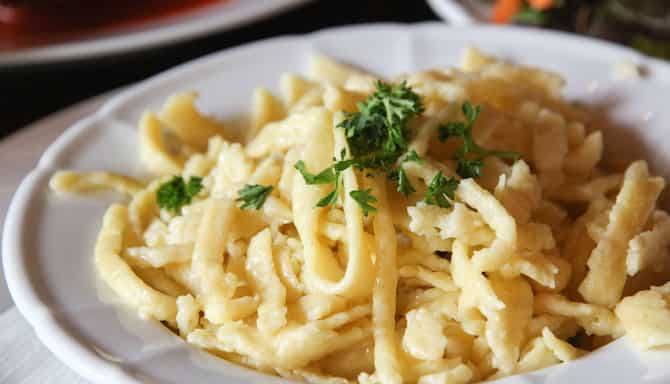
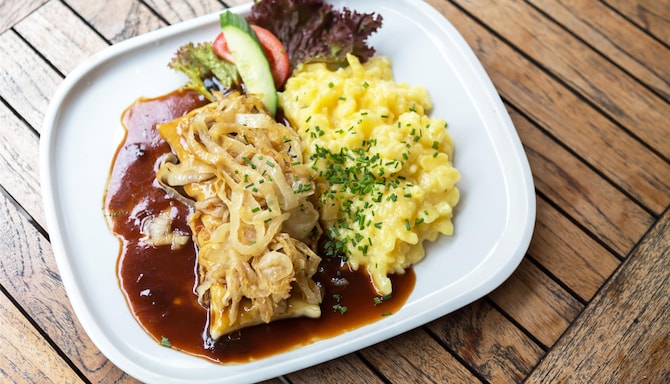
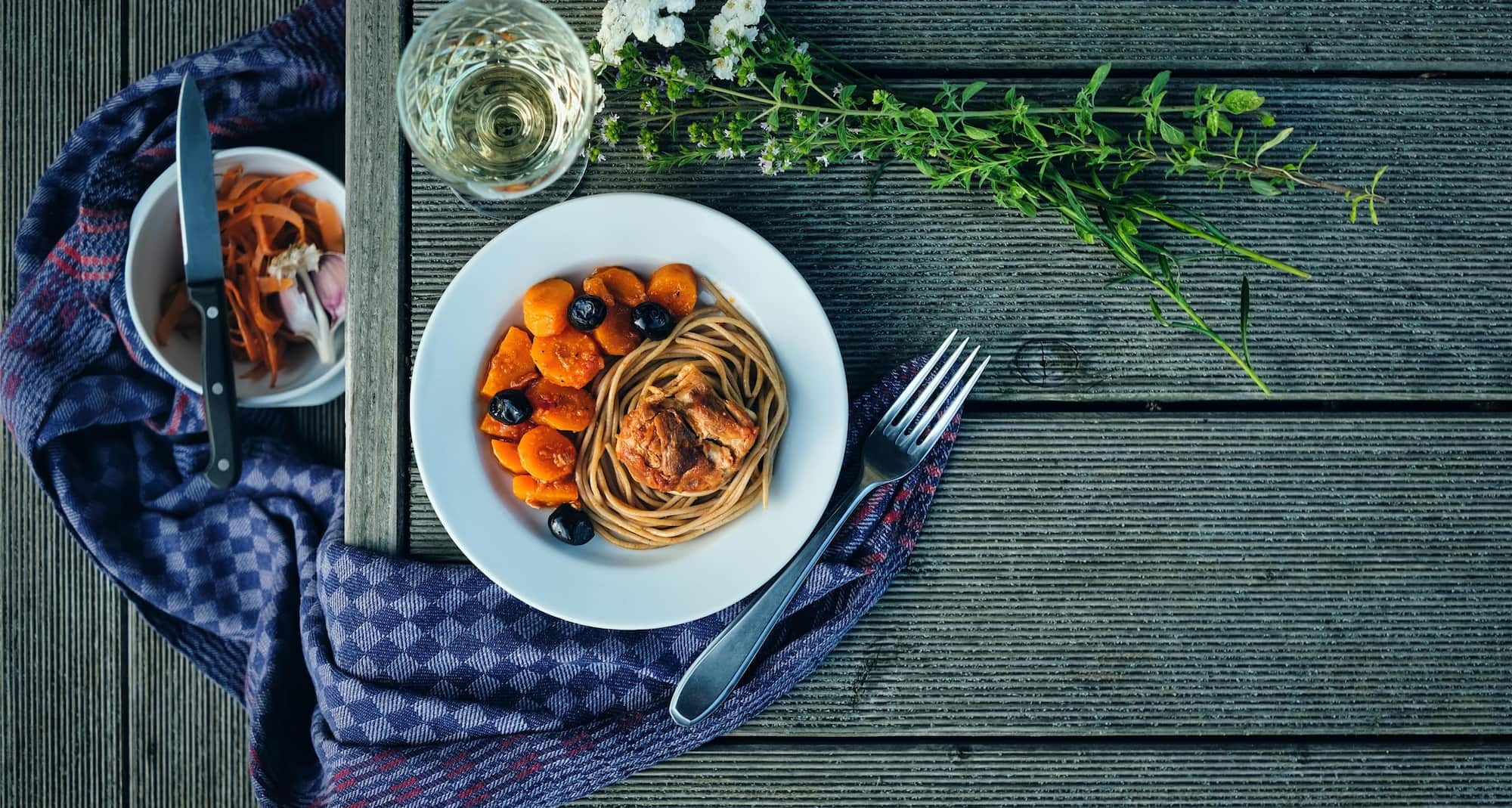
Start at the Markthalle, opened in 1914, where produce, fish, spice, and delicatessen stalls sit under a glass roof. For Swabian cooking, look for Maultaschen, Spätzle and Kässpätzle, Schupfnudeln with sauerkraut, and Zwiebelrostbraten.
Growers open seasonal broom taverns, marked by a broom at the door, pouring only their own wine. Look for Trollinger and Lemberger among the reds and Riesling among the whites. In late summer the wine village fills Marktplatz and Schillerplatz with arbors.
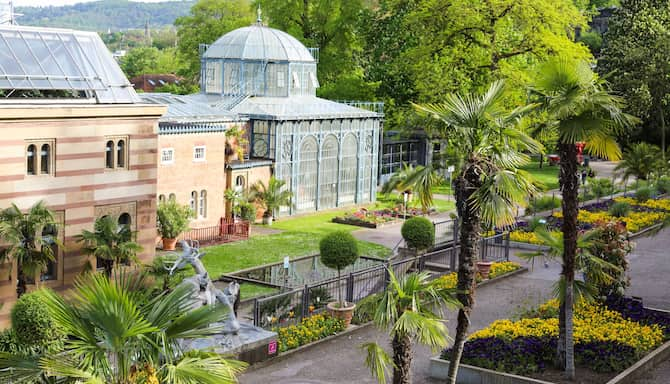
Stuttgart works well for families because public transport is straightforward and the green space is generous. Wilhelma is the obvious anchor: Germany's only combined zoological and botanical garden, with around 11,000 animals and 8,500 plant species across a 30-hectare Moorish-style park. Allow 3–4 hours.
Killesberg adds animal enclosures, a large playground, an observation tower, and a miniature railway. The Zacke rack railway climbs from Marienplatz to Degerloch and counts as both transport and an outing.
Break up sightseeing with the Schlossgarten lawns or a mineral bath. The Altes Schloss also runs a children's museum.
Stuttgart holds a genuine landmark of modern architecture. The Weissenhof Estate was built in 1927 for a Werkbund exhibition, with 21 buildings by 17 European architects under Mies van der Rohe. Two houses by Le Corbusier and Pierre Jeanneret have been listed as UNESCO World Heritage since 2016, and one holds the Weissenhof Museum.
The Staatsgalerie Stuttgart pairs an 1843 classicist building with James Stirling's postmodern extension of 1984.
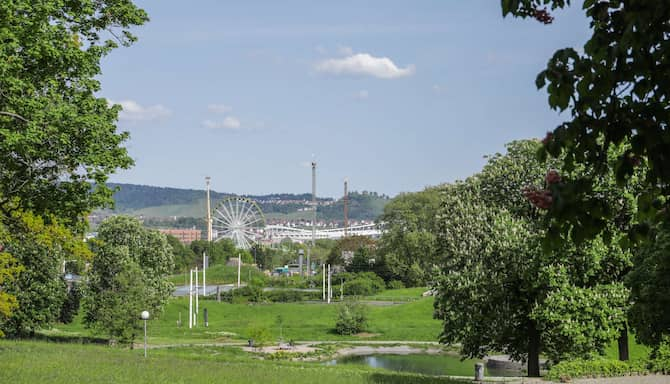
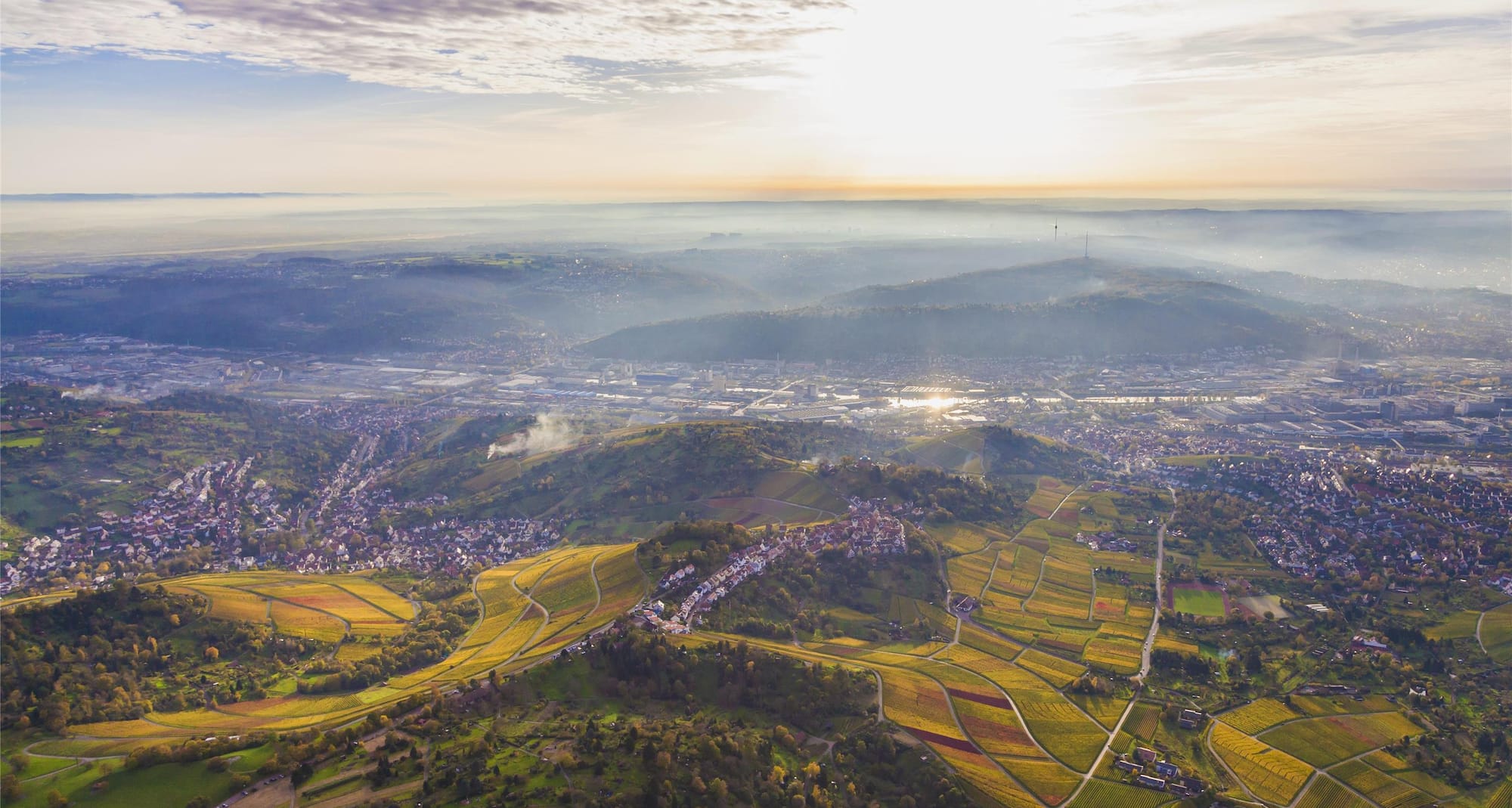
Stuttgart sits in a valley with vineyards running toward the center, and the city planned its green space to match. The Green U links the Schlossgarten, Villa Berg park, Rosenstein Park, the Leibfried Garden, the Wartberg, and Killesberg into eight kilometers of connected parkland.
The city also has Europe's second-largest mineral water reserves after Budapest. Three municipal baths use that water, so check bathing and sauna policies before you go.
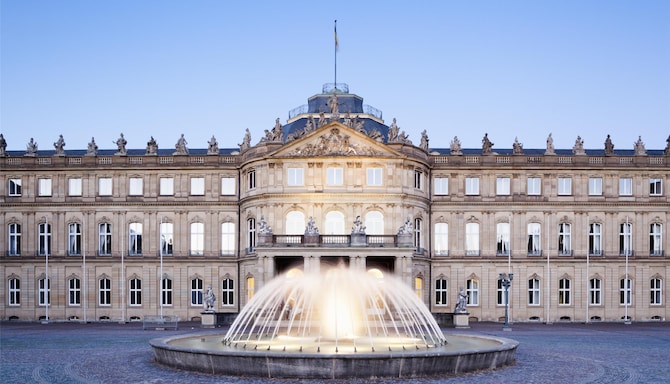
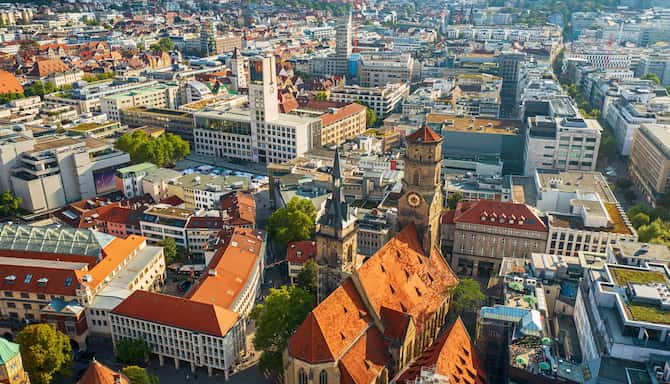
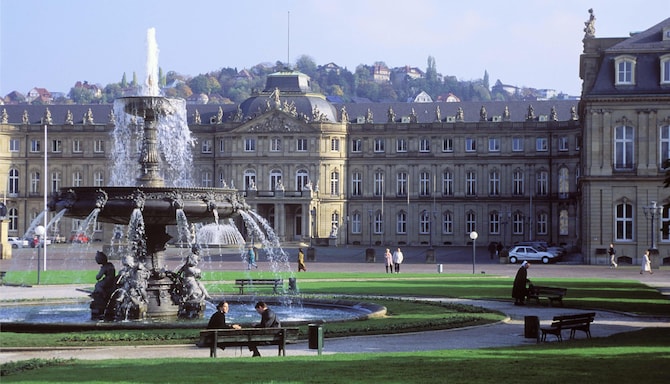
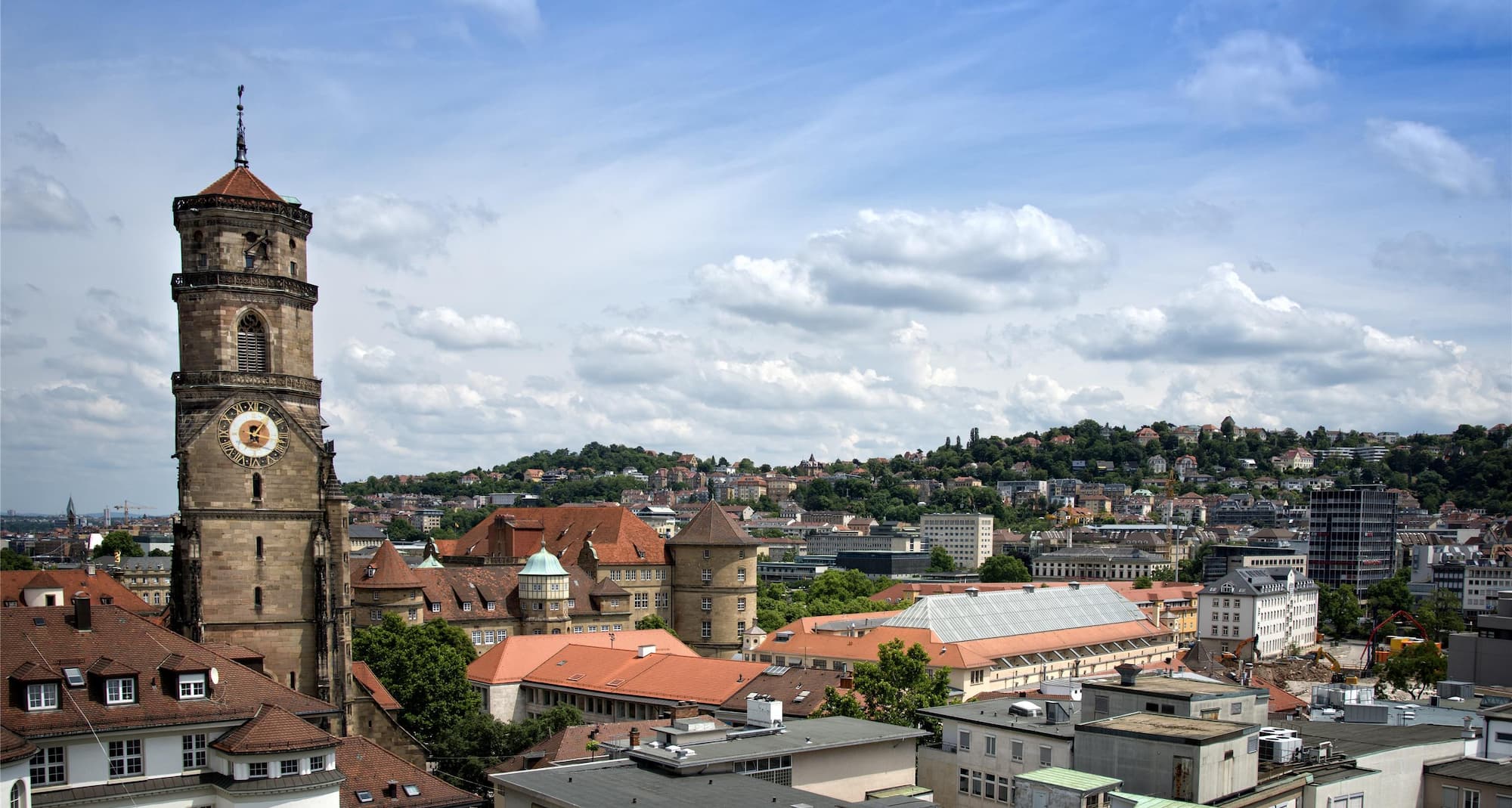
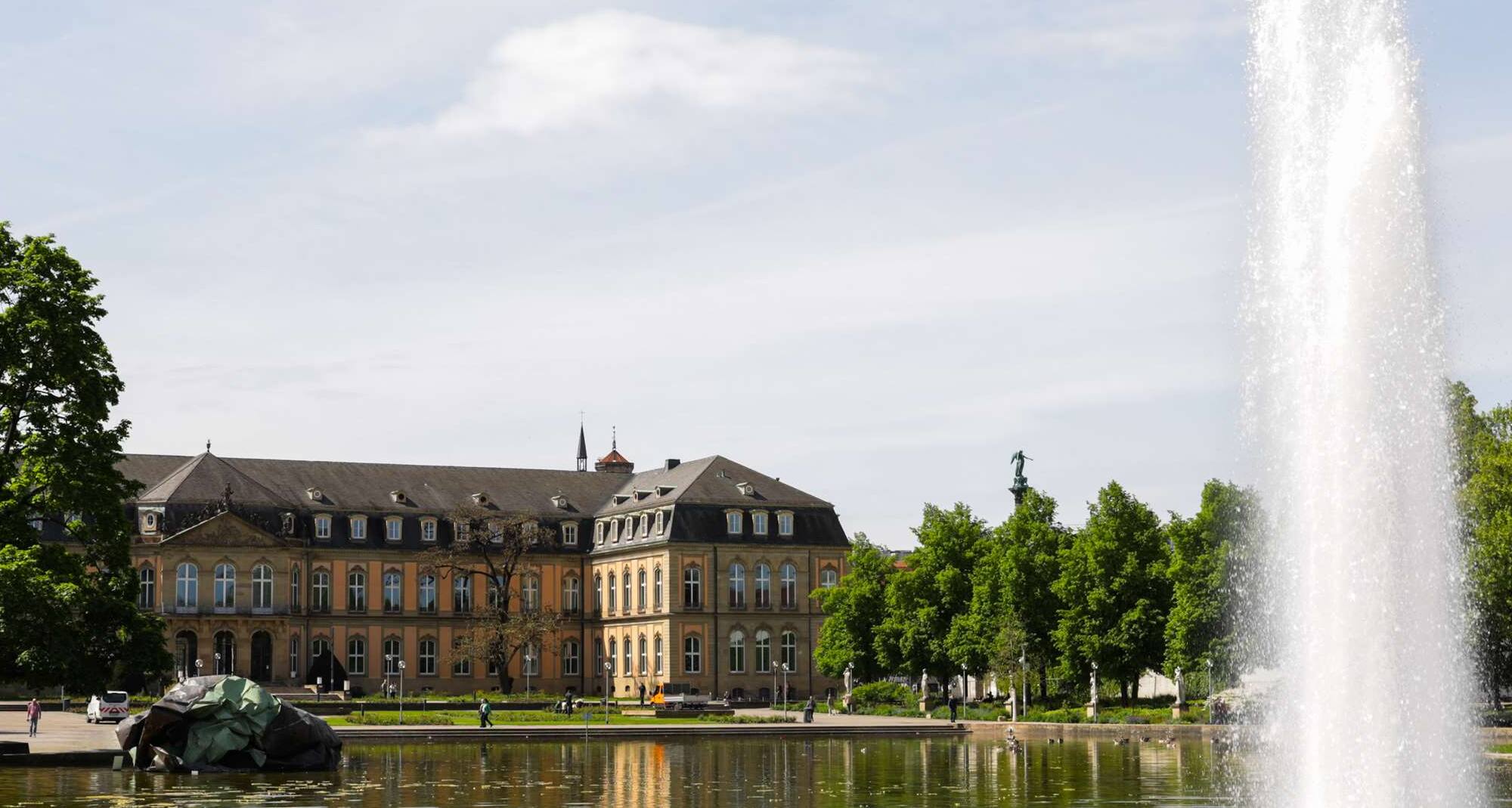
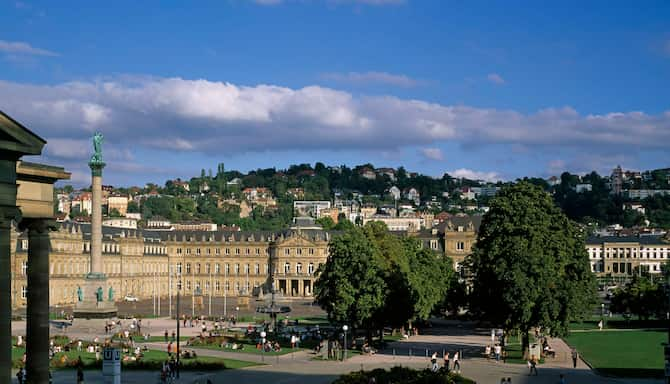
The Württemberg dukes and kings left their mark across the city. Start on Schlossplatz, where the Jubilee Column of 1841 stands in front of the Neues Schloss, built between 1746 and 1807 and now housing state ministries.
Across the square, the Altes Schloss wraps a Renaissance courtyard around medieval foundations and holds the Landesmuseum Württemberg.
Out of the center, Solitude Palace survives largely unchanged from the 1760s, with late rococo interiors and wide views north. The Sepulchral Chapel stands among vineyards on the 411-meter Württemberg hill, built in the 1820s for Queen Katharina.
Stuttgart is in Germany and the Schengen Area. Entry rules depend on your nationality, passport, and length of stay, so check official guidance before booking if you are unsure.
Bring comfortable walking shoes, since the city is hilly beyond the center. Pack layers for spring and fall, light clothing for summer, and a warm coat in winter.
English is commonly understood in hotels, restaurants, museums, and central shops. The city's tourist information office also handles French, Italian, Spanish, and Portuguese.
Two to three days covers Schlossplatz, one or both car museums, a major gallery, the Markthalle, and Wilhelma. Add a day for Solitude Palace or the Sepulchral Chapel.
Walk in the center around Schlossplatz and Königstraße, then use the S-Bahn, Stadtbahn, and buses for everything else. One VVS ticket covers every mode, and no car is needed.
Tipping is not required, but rounding up or leaving about 5–10% for good service is common. Hand the tip to your server rather than leaving it on the table.
German tap water is safe to drink. Note that restaurants serve bottled still or sparkling mineral water by default, so ask directly if you would prefer tap water.
S-Bahn lines S2 and S3 run every 15 minutes to Hauptbahnhof in about 25–30 minutes. The U6 Stadtbahn also serves the airport, roughly a five minute walk from the terminals. Engineering works can affect the S-Bahn, so check current service before you travel.
Start with Maultaschen, Spätzle and Kässpätzle, Schupfnudeln with sauerkraut, lentils with Spätzle, and Zwiebelrostbraten, with a local Trollinger or Riesling.